
Professional Services provided by Concept Environmental Solutions Limited
It is a statutory requirement under the HSE ACoP L8 that every premises should have a legionella risk assessment carried out.
This assessment should identify any such risks and recommend means of reducing,managing or eliminating the risk completely. In addition to this the document will assess current management roles and responsibilities and advise accordingly.
The risk assessment should then be reviewed on a regular basis (usually 2 years) or under specific circumstances. Legionella risk assessments are critical documents and should therefore only be undertaken by suitably trained and experienced staff.
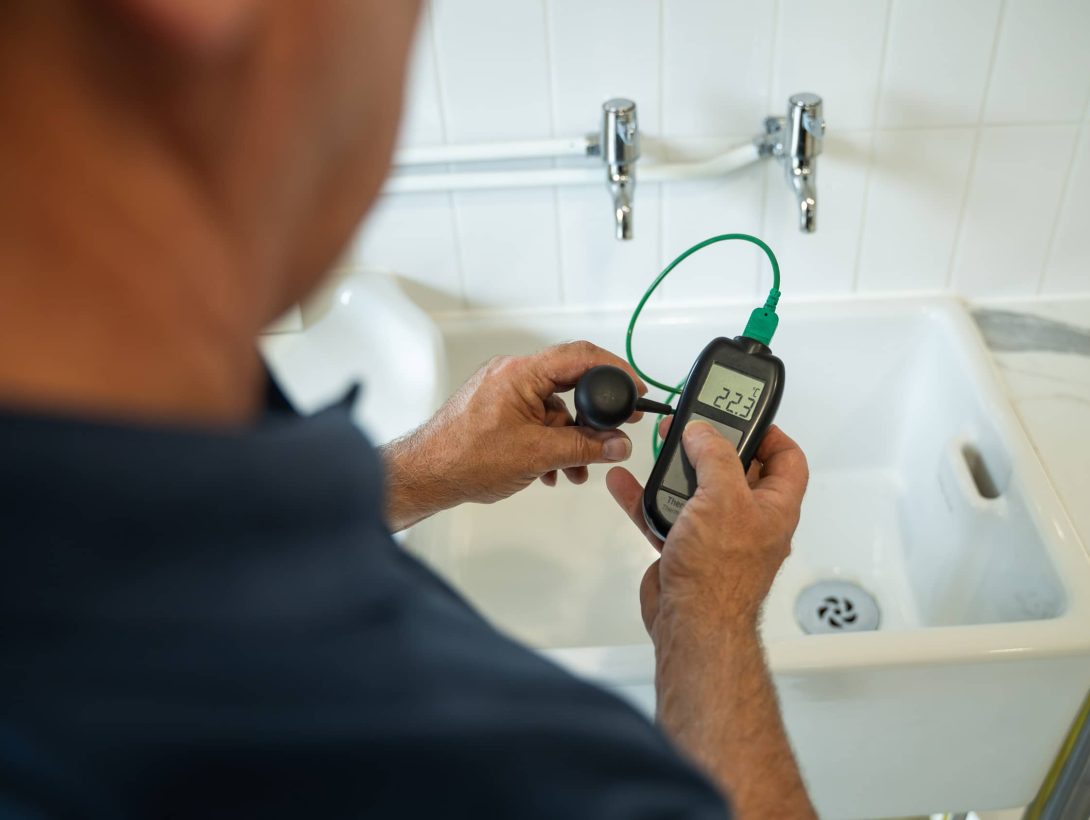
Under the Health & Safety at Work Act and the Approved Code of Practice L8, duty holders have a legal responsibility to assess and control the risk of Legionella. Our assessments are carried out in line with HSG274, so every part of your water system is covered and demonstrably compliant.
Compliance does not end with the assessment. We translate our findings into clear, prioritised actions and, where needed, a written scheme of control, so you can demonstrate to the HSE that Legionella risk is being actively managed. We tailor recommendations to your building and budget while never compromising on the controls the law requires.
Each assessment includes a full site survey, a current asset register and schematic drawings, temperature and condition checks, and water sampling where required, all brought together in a clear, prioritised report you can act on.
Our assessors survey the full water system, incoming supply, storage, calorifiers, outlets and any cooling systems, recording temperatures, dead legs and areas of risk. We build or update your asset register and schematic drawings, take samples where appropriate (using UKAS accredited laboratories where required), and deliver a report that clearly ranks each action by priority.
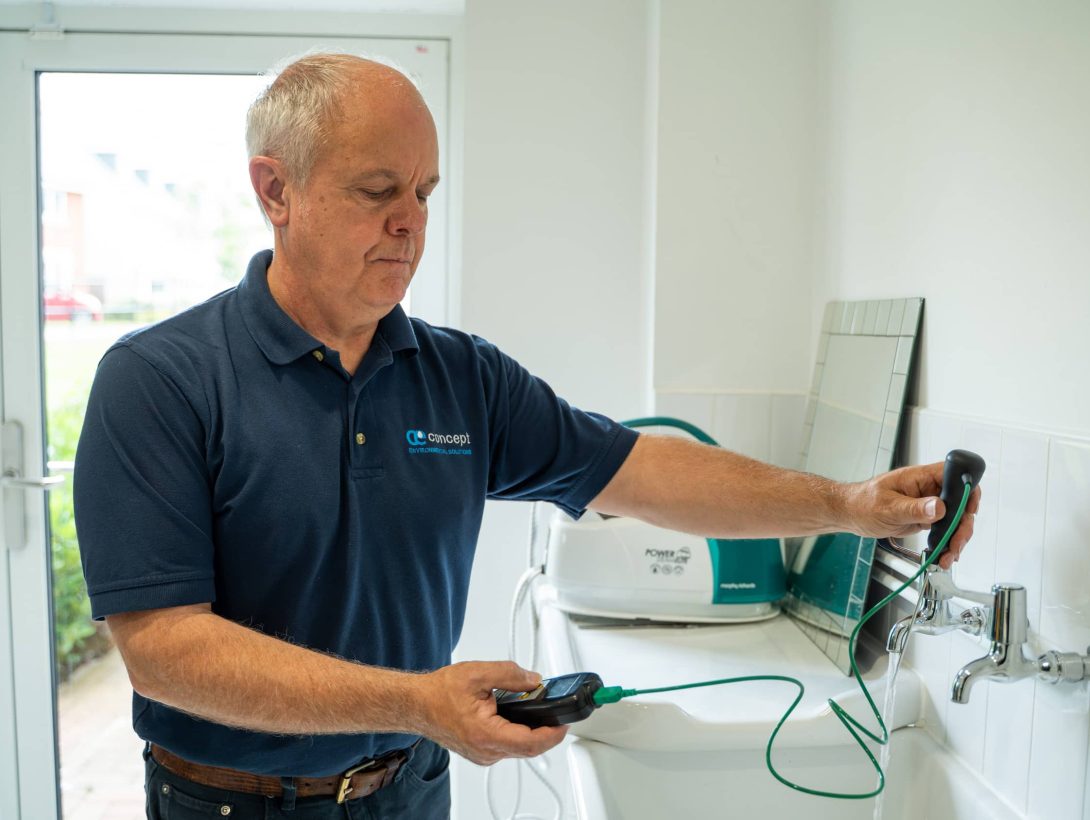
A risk assessment is a living document. We recommend reviewing it at least every two years, or sooner if your system, building use or occupancy changes, or following a suspected case, and we keep your records ready for HSE audit.
Should a 3rd party such as the HSE ever choose to audit your premises they will want to review the water hygiene/water treatment log book. A well maintained and well organised log book will allow easy and transparent auditing and show that your business is organised and takes health and safety seriously. This will undoubtedly be reflected in any subsequent report based on that audit. As an environmentally friendly company we promote the use of electronic means of record keeping wherever possible which is one of the reasons why we are able to offer electronic log books.
The key benefit of these ‘tools’ is that water hygiene/water treatment control programmes can be remotely audited. For a Manager who is responsible for the maintenance of multiple properties this is particularly beneficial as they have no reason to visit each property to carry out the log book audit and therefore save considerable time and money.

As an employer or a person in control of premises, you must appoint person or persons responsible for helping you manage your health and safety duties, e.g. take responsibility for managing risks. A competent person is someone with the necessary skills, knowledge and experience to manage health and safety, including the control measures. You could appoint one, or a combination of:
If you decide to employ contractors to carry out your risk assessment or other work, it is still the responsibility of the competent person to ensure that the work is carried out to the required standards. Remember, before you employ a contractor, you should be satisfied that they
The purpose of carrying out a risk assessment is to identify and assess any risks in your water system. The responsible person should understand your water systems and any associated equipment, in order to conclude whether the system is likely to create a risk from exposure to legionella, and should be able to identify whether:
Your risk assessment should include:
If you decide that the risks are insignificant, your assessment is complete. You may not need take any further action at this stage but you should review the assessment regularly in case anything changes in your system.
Yes. There may be other factors within your system that increase the risks of legionellosis, eg deadlegs, showerheads and/or long runs of pipe work containing warm water. A risk assessment should also consider anyone who could be potentially exposed to any legionella bacteria in your system, and particularly groups that are at a higher risk of contracting legionellosis. However, once you have completed your risk assessment you may decide that the risks are insignificant. If you do, you need take no further action other than to review the assessment regularly in case anything changes in your system.